
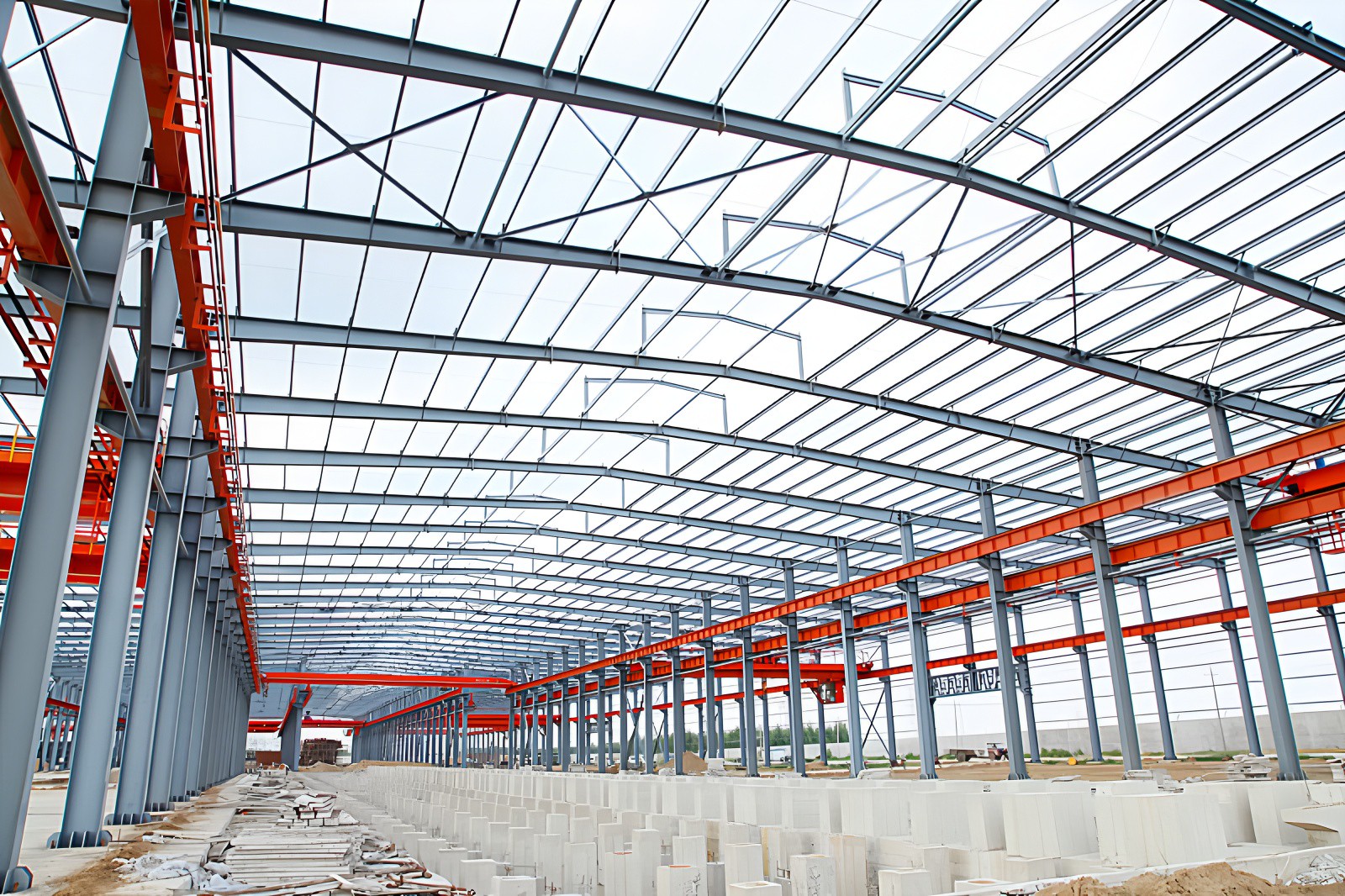
1. The core advantages of steel structure seismic resistance
Light weight and small seismic force: steel has an extremely high strength-to-weight ratio.Since the seismic force is proportional to the quality of the building, the lighter weight makes the steel structure withstand significantly less seismic force in an earthquake than the traditional concrete or brick structure.
Excellent ductility and toughness: Steel is a ductile material, which can undergo greater plastic deformation under the action of earthquakes without losing its bearing capacity.This characteristic allows it to effectively absorb and dissipate seismic energy, avoiding brittle fracture and sudden collapse.
Actual earthquake damage performance: In previous strong earthquakes (such as the 8.0-magnitude Wenchuan earthquake, the 8.1-magnitude earthquake in Mexico, and the Great Hanshin earthquake in Japan), most buildings such as steel-framed factories were basically intact or only slightly damaged, and the proportion of collapses was much lower than that of concrete buildings.
2. Key design and structural measures to improve the seismic performance of steel structures
Structural system and layout optimization
Reasonable selection: use more frame-support system or frame-shear wall system to take into account stiffness and ductility.By setting up energy-consuming beam sections, eccentric supports, etc., a clear plastic energy-consuming zone is formed.
Regular layout: The plane and facade layout should be as regular and symmetrical as possible to avoid mass or stiffness mutations to prevent serious torsional effects and stress concentration during earthquakes.
Node design and connection method
Strong nodes and weak rods: Ensure that the bearing capacity of the nodes is higher than that of the connected components, and prevent the nodes from being damaged before the components and cause overall instability.
Connection optimization: Priority is given to the use of fully bolted connections, which not only have fast construction and easy quality control, but also avoid the residual stress and corrosion hazards caused by on-site welding.For parts with high seismic resistance requirements, semi-rigid or flexible connections can be used to allow certain deformation to dissipate energy.
High-performance material application
Choose high-performance steel with good toughness and ductility.For example, it is stipulated that when the operating temperature is higher than 0℃, the quality grade of steel should not be lower than grade B to ensure the reliability of the material under complex forces.