
news
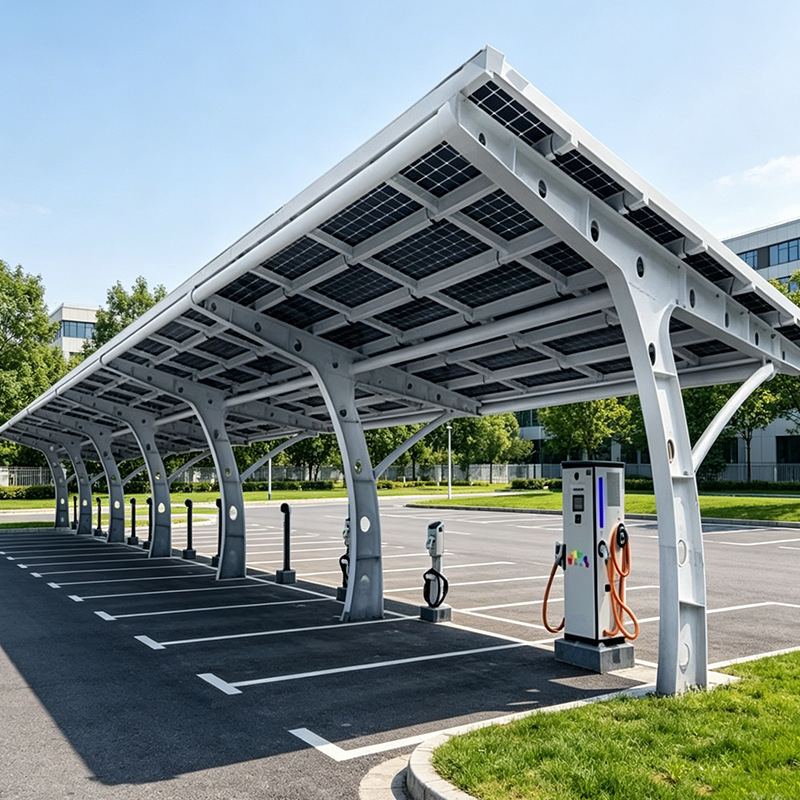
I. Mainstream Classifications of Steel Structure Carports
Membrane Structure Carports
Features: Flexible and aesthetically pleasing shapes (e.g., wave-shaped, saddle-shaped), extremely lightweight (only one-fifth the weight of traditional concrete), high light transmittance (13%-20%), and the membrane surface typically has a self-cleaning coating, easily washed away by rainwater.
Advantages: Enables column-free, large-span designs up to 100 meters in length, maximizing space utilization; optimized wind and snow resistance, and fire rating up to B1.
Applicable Scenarios: Large-scale industrial park parking lots, university non-motorized vehicle zones, high-end villa areas, and commercial complexes.

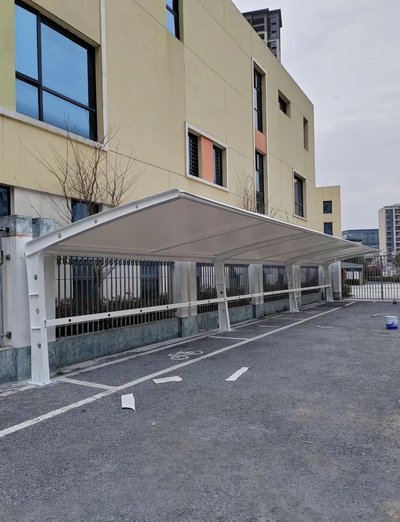
Photovoltaic Carports
Features: Integrating a carport with a photovoltaic power generation system, it not only provides shade and rain protection but also generates electricity. Currently, it is upgrading from standardized designs to "refined steel structures," especially the single-column scheme, which offers a cleaner visual appeal.
Advantages: It combines parking, power generation, and image display, making it a green infrastructure with both functional and asset attributes.
Applicable Scenarios: Industrial and commercial parks, charging stations, public parking lots, and transportation hubs.
Traditional color steel sheet
Features: Economical and practical, relatively good heat and sound insulation, high degree of standardization, and fast delivery.
Disadvantages: Relatively limited design options; prone to aging, rusting, or leaks when exposed to the outdoors for extended periods.
Suitable scenarios: Scenarios with extremely high construction speed requirements, limited budgets, and low sensitivity to long-term maintenance costs.

II. Core Technologies Determining Service Life
Hot-dip galvanizing for corrosion protection: Compared to ordinary spray painting, hot-dip galvanizing fundamentally improves the corrosion resistance and aging resistance of steel, significantly extending its service life.
Electrostatic spraying process: Electrostatics cause paint powder to be evenly adsorbed onto the metal surface. After high-temperature curing, a dense coating is formed with strong adhesion and resistance to sun and rain, effectively solving the problem of outdoor rust prevention.
Precision machining and assembly: High-quality manufacturers use fully automated CNC production processes (such as laser cutting and automatic welding), controlling processing errors to the millimeter level, eliminating structural deformation and leakage risks from the source.